Thursday, February 19, 2015

False Promises and Paperless Offices

 Remember those cock-sure computer commercials from the early ‘90s with all that bluster about how the paperless office was right around the corner?

They jumped the gun a little. In fact it started to look like it would never happen.

Studies found that paper consumption actually went up in the ‘90s. Type a letter. Print it out, see how it looks. Make a couple edits. Print it out again, take another look. Make more edits. Print it out again. See a recipe on the Internet? Print it out . . . and five unwanted pages spit out, too. In the ‘90s paper use was actually increasing 6-7% a year.

About that same time we were told books would quickly become rare fetish objects. That didn’t happen either. Books, dog-eared files and Post-it notes were hard to shake.

The paperless office promise may finally be coming true, but it sure took awhile.

The lag between technology arrival and society’s acceptance happened over a century ago with electricity. In the 1880s folks were amused and more than a little freightened by electricity. Sure, they were wowed by the early lamps and electric motors, but newspapers sensationalized stories of big city folks electrocuted when they stepped into a puddle of water that rested above a buried, faulty cable, or got shocked or had their houses burned down by a primitive electric toaster. And using it wasn’t practical. Early power stations didn’t run 24 hours a day and you’d have to get your house wired up, buy a bunch of appliances, and then hope you didn’t get eletricuted by that invisible force.

You can imagine people thinking, “Awe fuck it! Let’s just light the gas lamp and keep making toast in the skillet with pork lard.”

But the Chicago World’s Fair of 1893 changed all that. Folks saw the city-sized fair grounds lit by electricity. They were transported on moving sidewalks powered by electricity. They saw improved toasters, electric lamps, stoves, telephones, and every manner of machine that could be powered by electric motors. That fair had the greatest attendance of any temporary event in U.S. history and is credited with demystifying electricity for Americans. Jump ahead 20 years: the average American home could be lit, heated, and fed by electricity. It took a generation for the technology to become truly functional and for folks to get comfortable with the idea.

The early predictions that computers would eliminate paper use were similar.

People are reading fewer paperbound books now, as was predicted, but that took time, too, and I figure that’s only half because they found something easier than paper. Some of the reason people don’t read books is because they’ve developed short attention spans. Who has time to read a book with all that Honey Boo-Boo and CSI and YouTube to watch?

But of course people also don’t read paper books because they’re reading Kindles and iPads and Nooks. Some folks like to grumble about this, but I don’t think it’s bad at all. A couple winters ago I read the entire Girl With The Dragon Tattoo series on my iPhone while riding a stationary bike at the gym. Last winter I read The Old Man And the Sea and Things Fall Apart. That’s five books I read on my phone rather than watching cat GIFs and reading snarky memes on Facebook.

How can that be bad?

And now my own real estate company has finally introduced a document system that truly IS revolutionizing my industry. Lemme tell ya, real estate offices have been huge wasters of paper – making multiple copies of every damn document in a transaction. But consider this: Last week I received a purchase agreement that was created on a computer. The buyer had signed it electronically – no touch screen needed, just credentials sufficient to allow them to click-in a facsimile signature. I uploaded it to my company’s new document system, called Dotloop, added language saying we were submitting a counter offer and invited my seller to create an identity so he could sign electronically. We negotiated the entire offer with no party printing out a single piece of paper. The inspection, complete with photos was submitted electronically and negotiated using the same software.

Note that my seller was in Florida the entire time, is over 70 years old and a little intimidated by technology. But he had little trouble with the simple software instructions.

Until just weeks ago, when transactions were finished, Realtors in my company submitted thick paper files we were required by law to keep for several years. Now, we’ll submit an accumulated electronic file for approval, and it’s stored in “the cloud.” No paper. No file. No warehouse with years of files.

And I’m a “mobile agent.” My office is called, “Papa Was a Rolling Stone;” wherever I lay my laptop is my home. So I love this new paperless world. My desk is in my backpack and my office immediately appears wherever I sit down and open my phone or computer. But breezing through my company’s local office, I still pass other agent’s private offices that have desks and file cabinets and credenzas and I wonder what they keep in all that furniture. That’s the next revolution: why do we have this building and all this furniture? I meet my clients at Noble Coffee, Matteo’s, Starbucks, and at their kitchen tables and they can sign documents with their finger on a phone?


And just like a century ago when light bulbs were being bought by folks for the first time and their gas lamps were being pulled down and thrown in the trash, history is quietly taking place in my office this year. File cabinets are emptying and will start disappearing. We have no need for them in a paperless office. That old promise is finally being realized.


The most recent: The Great Electric Railway Swindle of 1893

Tuesday, February 3, 2015

Thoughts On The Girl At The Gym With Big Boobs

From my exercise bike in the front row at the gym, I’ve come to recognize long-time employees of the fitness center and a broad assortment of people who come to work out at the same time everyday.

There’s a young woman who works in the gym office who always wears a low cut top that puts dramatic emphasis on her breasts. They appear to be under intense pressure, on the verge of leaping out. This is an important fashion theme for her because she dresses that way every single day. And in case your eyes aren’t automatically drawn to her cleavage she wears a sparkly necklace that glimmers right across her breasts – like twinkling lights that calls out, "Hey! Looky here!"

From my bike I have a clear view of her at her desk in the office area. I notice because I am a heterosexual male. It's harder for me to not notice than for others, perhaps because I lack self-control. Such is the curse of the youngest, pampered child in any family. We youngest children lack self-control because we were never much required to have any.

In fairness, I notice her as much as I notice the muscle-bound dude who works out with a knitted cap turned sideways on his head (man, that hat’s gotta stink!), and the anorexic-looking middle-aged ladies who hurry in like speed walkers to jerk and pump on the elliptical trainers as if running in fear from something the rest of us can't see.

I like to watch people.

Back to the woman with her breasts strategically on display. I wonder what happened to those clever t-shirts with an arrow pointing up and a line across the chest that read, "My eyes are up here." Time was when women took offense at men who stared at their breasts. I'm not offended by this gal’s fashion choices, I’m just an amateur urban anthropologist wondering how it all got this way. Have we reached a time when a woman might wear a hat with an arrow pointing down that reads, “My boobs are down there,” you know, just in case men look in her eyes too much in conversation.

There is an experience that can temper the tendency to ogle people's exposed bodies: Nude beaches. That sounds counter-intuitive, but trust me, it’s true. Traveling in Europe during and just after my college years, a couple times I found myself on nude beaches in the south of France. I’m a good, body-conscience Hoosier, so kept my swim trunks on, but still it’s initially disconcerting to find yourself on a beach towel that's touching the beach towel of a naked elderly man or woman, and terribly distracting to buy ice cream from a naked, lovely, shapely, beach vender. But funny thing is, you get desensitized after a couple hours until it’s just not so . . . well, interesting.

It’s kinda like opening a bag of freshly ground coffee. That first whiff is intoxicating, but if you keep going back for successive snorts, you can’t reproduce the initial rush. Your senses get satiated. It’s like that with naked women on a nude beach. By middle of the afternoon, when a pin-up worthy woman walks by, you’re shrugging, “yeah, whatever, big deal . . .” It’s probably how Tom Brady feels about seeing Gisele naked at this point in their marriage. And seeing so many nude people, people of varying ages and body shapes, you start to think, “Hey, we’re all just human beings. This is natural.” But being a Hoosier, I didn’t think it so much that I took my swim trunks off.

Which is perhaps why I’m constantly trying to hide my chest – what I call my “moobs.” I joke about my moobs. I'm an opinionated guy and I find my opinions go down better if the joke is on me fairly often.

You see, sometime in my 30s my ass disappeared and repositioned itself on my stomach and chest. It’s not an attractive body shape. I once had an elderly client tell me a story about a golfing buddy he referred to as, "No Ass." I asked why he was called No Ass, and this dear old man replied, laughing, "Because he had no ass!"

That stung a little. I told him flatly, "That's not funny."

If I gain 5 pounds, it’s not on my ass or thighs, it’s on the front of my body. Which explains the moobs. Which is why I’m at the gym. If I gain too much weight, I’ll have to wear a bro to keep my moobs from flopping around. Guys with my body shape don’t wear revealing, low-cut tank tops or those skin-tight shirts the muscle-bound dudes wear that stretch tight across their pecs and biceps and six packs and whatever else they’re always flexing in the mirror. Instead we wear male maternity clothing – oversized t-shirts, fleeces and flouncy flannels.

And a lot of black and vertical stripes. They’re slimming.


Which is why I’m a little self-conscience when my t-shirt gets sweat soaked at the gym. Maybe I should work out in one of those shirts with the upward arrow that says, “My eyes are up here.”

View Kurt's Behind Noblesville Posts


Buy Kurt's Book, NOBLESVILLE


Thursday, January 8, 2015

Remembering Huvie

“Boredom. Days and weeks and months of boredom . . . mixed with . . . dread!” he shook his head and shuddered, as if to shake off the thought. As he spoke the house was filled with the smell of turkey in the oven.

That’s how my father-in-law, Huvie (pronounced like “Groovy”) described his days on a mine sweeper in the South Pacific in World War II.

“We’re taught to avoid danger, but it was our job to look for mines. We were looking for bombs. It’s boring. And it’s terrifying, let me tell ya!”

Huvie & Carolyn, circa late 1940s
It was Thanksgiving. We were sitting in the den of Huvie and Carolyn’s old Victorian home in Bluffton, Indiana. It was the late ‘80s or early ‘90s. He sat in the dark vinyl recliner, his long legs crossed, a can of Meister Brau and paper plate of potato chips on the black metal TV tray beside him. Detroit Lions fans cheered from the television. The women were somewhere, doing something. Huvie and I, and maybe a child or two were watching the Lions game.

“We knew the Japs were at Iwo Jima because there were no mines. Later, after the fighting I was just randomly looking through binoculors and saw the flag the marines raised atop Mount Suribochi.”

The cadence of his accent was a midwestern mashup of Missouri and Michigan. He wore black glasses and a white ring of hair around his bald head. He was tall and lanky, with welcoming, friendly body language.

I’d married Huvie’s 4th daughter in the adjoining living room just a few years earlier. When we discussed plans for marriage, he looked at me across the dining room table and said, “I’ll give you $2,000 and an extension ladder if you’ll elope.”

I laughed.

“I’m not joking," he said. "I’m serious! It would all be easier that way, and you’d have a ladder!”

His name was Robert Huvendick, but almost nobody called him Bob. He was Huvie to everyone.

He was raised in Missouri during the depression in what we’d recognize now as poverty. The austerity and deprivation of that childhood would frame his view of money for the rest of his life. He sold fuller brushes before heading off to the war and came home to marry Carolyn. He went to college on the GI bill and played basketball until he blew out his knee. From that day on golf was his sports obsession.

On perhaps another Thanksgiving, over yet another Meister Brau and a paper plate of potato chips nestled in a wicker plate holder, he laughed about the birth of his first daughter, Sally and how he left the hospital and drove through town honking his horn and whooping and hollering out the window to alert the world.

He worked his entire professional life for Corning Glass, first in Albion, Michigan, and then in Bluffton, Indiana. In the years after his retirement, my family spent many summer weeks at his lake cottage on Duck Lake in southern Michigan.

The tackle box on his pontoon boat displayed the austerity he brought to everything he bought. He could afford a big, fancy tackle box and an expensive rod and reel, but that would be foolish. The box was small and maybe a kid's starter tackle box. It was filled with  assorted hooks, sinkers, a half rusty pair of needle nose pliers, spare black rubber worms and a Durkee spice-rack bottle of anise oil. He dipped the rubber worms in the oil, convinced it attracted the bass that lazed under the docked boats on a hot summer day. A live box beside the dock gathered bass during our visits and if the catch was big enough he’d clean them on a rickety picnic table.

Once he asked my littlest, also named Sally, if she'd like to watch him clean the fish. Perhaps 6 or 7 years old, she happily said yes, thinking they'd scrub them with soap and water. But as he cut the head off the first one she screamed in horror, "You're not cleaning them, you're killing them." 

She cried hard. He laughed hard.
Huvie & Carolyn, circa 1990s

While at Duck Lake, he read the Detroit Free Press everyday and was always in the middle of a book, beginning a book, or finishing a book. Library books and loaned paperbacks littered both home and lake cottage. In the afternoons he’d putter on a project, wash the sail boat, paint some trim, tidy up the wood pile, or sit before the TV watching golf, his legs crossed, working a toothpick in his mouth. From time to time he'd sit in a chair in the front lawn with a towel draped 'round his shoulders and Carolyn would give him a haircut. Most days, he'd bath in the lake with a bar of soap kept at the end of the dock.

He made martinis promptly at 5:00, or a little earlier, because, “It’s 5:00 somewhere,” he’d mutter, pouring inexpensive gin into two glasses, then a whiff of vermouth, and a slice of lemon. He never made just one. The first he took to his wife, who he’d remain married to for 68 years until his death. He grilled steak or chicken and warn of its imperfections when he brought it in. And though eating it on garage-sale plates and all of us sitting on a madcap assortment of second-hand chairs most other families wouldn't bother keeping, he’d say in a deadpan tone, “I wonder what the poor folk are doing tonight.”

Huvie’s explosive sneezes would scare children shitless and his hearty laughter could make a dark day bright. He would maddeningly retell the same stories and jokes and worried about practically everything as if it was his full-time job. Presented with a toddler, he’d cross his legs and saddle the child up on his foot for a horsy ride to the tune of “Yankee Doodle.”

On one of the last Thanksgivings spent in the den back in Indiana before the Lions’ game with Huvie, he shared details of the death of his oldest daughter, Sally, decades earlier when she was 16. This story, seldom uttered in their home for the shear oppressive, suffocating weight of its sadness just came out of him – the confusion, the terror, the unexpressable and unnecessary guilt that nagged at him every single day thereafter. When I told my wife later that night what her father had told me she sat up in bed in disbelief.

In ways I’d never realized, he was a 2nd father to me. Over the years that I knew him he showed more appreciation for my hard work and creativity than my own father did. But sadly, my connection to Huvie ended 4 years ago amid my separation and divorce from his daughter. It could be said that in Huvie’s world I proceeded him in death by 4 years. That put a little burning coal of hurt in my heart that I will probably never get over.

Still, in the summer when I cross the Little Chicago or Carrigan bridges and catch the silhouette of a man fishing from a pontoon boat, I immediately think of Huvie. When the smell of turkey fills the house and the Detroit Lions are on TV, I forget about my snooty beers and wish I had a Meister Brau. And when someone bounces a child on their knee and sings “Yankee Doodle,” it’s Huvie’s voice I’ll hear.


Farewell Huvie, you were such a good man.


Read Kurt's Behind Noblesville Posts


Buy Kurt's Book, NOBLESVILLE

Thursday, January 1, 2015

Kurt's Favorite Music of 2014

As always, my year-end music post is not about what was "best." I don't really believe in the notion of "best." There's only what I like and what you like. So consider this simply my favorites from 2014.

Gary Clark Jr.
I saw more great live music this year then in any single year before, including a number of acts I've loved for years but have never seen live, people like up and coming bluesman Gary Clark Junior, who offered a soulful, sometimes blistering performance proving that he's worthy of all the hype (sample: When My Train Comes In). And the indie-folk rock act with Michigan roots, Lord Huron (sample: She Lit A Fire), presented a rousing show, focused around their brilliant 2012 album Lonesome Dreams. I also saw Ryan Adams for the first time this year with good friends Matt & Kelli Yates. I’ve been a huge fan of Adams since the 1997 Whiskeytown album, Strangers Almanac, Adam's first band. I worried that it might be a spotty show because of his legendary moodiness onstage, but he presented a broad cross-section of his solo career, managing to hit crowd favorites, his own pet favorites, and promote a new album all in one evening (sample: Kim)

On last year's list I noted that Jason Isbell’s album Southeastern was my favorite album of 2013. Music critics are now calling that album a songwriters primer, as good a lesson as any for aspiring young songwriters on the crafting of a wide variety of country-based music. I saw Isbell twice this year. First, in an hour-long set at the Forecastle festival in Louisville. It amounted to a quick, but enjoyable rundown of highlights from his career, starting with Drive-by Truckers material and including a quick list of every song an Isbell fan would demand from a best-of album. But I saw him two months later at the Ryman Auditorium in Nashville and that show was something different entirely - one of my favorite concert experiences of all time.

Paul Janeway holding forth!
The show was opened by St. Paul & the Broken Bones, an act I'd never heard. The band took the stage and played an instrumental blues strut that felt like a warm up. It was. When lead singer Paul Janeway came on stage at the start of the second song, about a third of the audience went crazy – the only proportion of the crowd that knew what we were in for. Janeway is white, short, chubby, balding, was wearing big black glasses, a black suit and sparkling gold slippers. Hardly the model of a blues frontman. But when he grabbed the mike and opened his mouth it was like a bomb went off! A bomb made of blues, soul and gospel. By the time St. Paul worked through a 40 minute set of original soul and R&B tunes, the church pews of the Ryman were empty because everyone was on their feet. That was perhaps the most unexpected pleasure of an unknown opening act I have ever experienced. I enjoyed it so much, friend John Norton and I scored some free street-corner tickets six days later to see them at the Vogue on Halloween. Another inspiring show. If you want to check them out, I suggest a live recording. I find their only studio album a pale shadow of their live show. Try this recording from a show at Indy's Radio Radio last May: (sample: Dixie Rothco)

A little spice was added to the evening when I found myself standing in the bar line between acts chatting with John Paul White of the Grammy Award-winning duo, The Civil Wars. We agreed that St. Paul kicked ass, that Tanqueray was our preferred gin and that Pyramid was an admireable IPA. He signed some autographs, but I didn't ask for one, because at that moment I didn't realize who he was. I like The Civil Wars, just never paid attention to what that male singer looked like. It was for the best. I’d have probably acted like a damn fool if I’d known.

Isbell did a two and a half hour show that reminded me why he’s my favorite Americana songwriter. He stretched out, presenting a deeper, more confident retelling of his career than during the Forecastle show, hitting emotional highlights, dedicating songs to his wife who was on stage backing him on violin, and various family members, including his parents and extended family, all of whom where in the audience that night. Touching highlights included CoverMe Up, the autobiographical “couple’s skate,” as Isbell put it, about the redemption found falling in love with his wife while he also battling his addition to alcohol, and Outfit, a song he wrote about his father.

In 2014 I also saw The Replacements, Band of Horses, Ray Lamontagne, Nickel Creek, The Avette Brothers, Boy & Bear, and Dwight Yoakam. The all out goofy-fun concert highlight of my year was Beck’s Sunday night headlining finale of Forecastle festival. With the city lights of Louisville behind us and the Ohio river and its bridges as a backdrop, Beck ran through a dazzling marathon of a show that would be perfect should he ever find himself a Vegas headliner. Pure joy!

My favorite album of the year was The War on Drug’s Lost In The Dream. My favorite albums aren’t necessarily filled with hits, but those that take you somewhere new, that feel like a specific aural location, a little musical vacation. It opens with mechanical clicking and scratching, backed by a floating guitar in Under The Pressure, suggesting a techno album, but an insistent, bouncing guitar line arrives and pulls you through a trippy groove. Though intensely atmospheric, it’s essentially a guitar album, with a Springsteen-meets-Echo And the Bunnymen number like, An Ocean Between The Waves, and the plaintive slow groove of the title track Lost In The Dream. If you didn’t speak English and couldn’t understand the lyrics, you’d still hear yearning, desire and longing in every track; some triumphant, some aching.

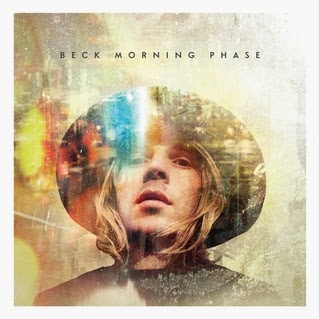
Running a close second for my favorite album of 2014 is Beck’s Morning Phase, a truly atmospheric, almost orchestral collection of songs that at times feels like a mash-up of Beck and Enya. But considering I like Enya, that’s fine with me. Spreading out my blanket to watch his show at Forecastle, I wondered how he would headline the festival's final party while still promoting this often somber new album. Wise man – he didn’t even try. Perhaps the only song he played from Morning Phase was the upbeat Blue Moon. While I've always enjoyed and often admired Beck in bits and pieces, I'd never been a huge fan. But I'm a huge fan now.

Songs of Honorable Mention:

Sturgill Simpson: Turtles All The Way Down 
This brilliant tune came to me recently from my son Jack. It's a quirky, spiritual manifesto set to '70s-era country, complete with strings. The psychedelic video, linked here, is a delight!

Hozier: From Eden  
This Irish blues singer/songwriter is perhaps the most brilliant newcomer to hit the music scene this year. I found the debut album spotty, but there are a handful of absolute gems there. This song is my favorite sinner's love song of all time. Lyrical genius!


Buy Kurt's Book, NOBLESVILLE


View Kurt's Behind NOBLESVILLE Posts


Tuesday, December 16, 2014

They Say Christmas Is About Jesus

On my way down Conner Street, a man standing on the corner in front of the Judicial Center was illuminated in my headlights. He held a sign that read, “Christmas is about Jesus.”

I smiled sadly. I’ve grown cynical about those trying to enforce what this time of year is “really all about.” But I also realize it’s no small matter to stand in the rain in the dark flashing a religious placard at people, so I want to think he’s sincere. Yet, what he means by “Jesus” may not be what I’m thinking of.

As I drove on, the man and his sign disappearing in the rear view mirror, I thought about the self-satisfied Christians I see around me, those who want to talk endlessly about Jesus and yet eagerly and smugly spout half-truths and myths about the poor. That hateful disconnect gnaws at me this time of year.

A lot of people want to talk about Jesus but aren’t much interested in his teachings about the poor. It’s an inconvenient truth to be glossed over while we think about redemption.

Scanning the talking heads on 24-hour news channels in recent years it was easy to find the indignant, teeth-gritting insistence that welfare recipients be drug-tested. The underlying suggestion: “They’re all lazy drug users, right? They’re not getting my money to spend on drugs!” Never mind that states that have tested found relatively few drug abusers and cost taxpayers far more than was saved by creating a bureaucracy to administer the tests.

Yet, another class of welfare recipient is let off the hook. Every time you buy food or drink in a restaurant in the greater Indianapolis area you’re paying a tax for Lucas Oil Stadium. Do we drug test the millionaires profiting from those government handouts? Jim Irsay? Andrew Luck? The Lucas family? Our farmers also take welfare checks, the checks we’ve given the clean name, “farm subsidy.” Why aren’t we drug testing all of these people? They take government handouts just as surely as welfare recipients.

We might have scared Jim Irsay straight and actually saved taxpayers some money if he were forced to reimburse us some of our tax dollars with his millions.

Funny that once somebody has money in their pocket we stop asking questions. The Jesus I read about didn’t. He started by doubting the people with money. I’m disheartened that our secular impulse to hate the poor gets disconnected from our belief that Christmas needs to be about a guy who urged us to love the poor.

Maybe it’s because most people don’t know that the average family taking government assistance has at least one adult working full time – but that job doesn’t pay enough to live on. Yet we feel free to hold their feet to the fire, casting them as lazy and suspected drug users while ignoring our farming and football welfare queens.

In the angry, carefully manufactured political emails that slither into my inbox, I still hear welfare recipients stereotyped as the black inner city welfare queen who wears a fur and drives to the grocery in her Cadillac to buy cigarettes, booze and birth control with her food stamps.

When you discover how easy it is to prove so many of these stereotypes wrong, you realize that people don’t believe it accidentally, they’re not simply mistaken, they WANT to believe these things. I guess most of the white, middle class Christians sending me these hateful emails don’t realize that the average welfare recipient isn’t black and inner city, but in fact white and rural.

Hoosier humorist Kin Hubbard once wrote, “It’s no disgrace to be poor; but it might as well be.” If Jesus was on Twitter, I bet he’d sound a lot like Kin Hubbard.

Of course most Christians care about the needy, offering assistance through their churches, Habitat for Humanity, and many, many other organizations. Still I puzzle over the anti-poor undercurrent found mostly in our political debates.

As I scan social media, I routinely find little memes like the one at right posted by good Christian folks. It’s got about it what Stephen Colbert calls “truthiness;” sounds like it’s true, but it isn’t.


For over 30 years America has been redistributing wealth – from low and middle-income workers to those at the top.

Those at the top of U.S companies – who in most cases do not own the companies they work for, continue to pay themselves and their colleagues more and more and more, while whittling away at pay and benefits for those at the bottom, lobbying against unions, and against having to pay their fair share of taxes. And this is so enshrined as a supposed moral foundation, if point it out you’ll be accused of class warfare.

You can’t multiply wealth by dividing it? That’s precisely what America did in the 1950s – you know, in the “good ‘ol days,” when the wealthy paid more than 90% of their income in taxes and union membership was high. It was a time when the difference between a CEO’s income and that of an entry-level worker was much smaller than it is today. Much, much smaller.

And the economy boomed. And the middle class grew.

The author of this twisted list of 5 “truths,” and the endless number of folks who shared it on their Facebook walls must not be aware that the average welfare recipient takes welfare for a relatively short period of time and doesn’t in fact live on it their whole life. Some do, but that’s not the norm.

And the notion that half of the public believes, “they do not have to work because the other half is going to take care of them,” is astonishing in its arrogance. In that 50% of Americans are the elderly who spent their lives paying into social security and are now drawing it (and still paying taxes), active duty soldiers and vets getting promised pay their earned by protecting us (and still paying taxes), and people getting unemployment benefits after paying unemployment insurance taxes for years (and still paying taxes).

I was told once that figures can lie and liars can figure. It’s one of the truest things I ever heard.

When your hatred gets so strong you lump the elderly, the soldier and the laid-off worker into a bundle with the few who truly scam the system, well, you’re an overachiever, though not a very admirable one.

But, don’t forget, “Jesus is the reason for the season!”

This blind hatred of the poor is what makes me sad when people say, “Christmas is about Jesus,” because so many of them also refuse to embrace Jesus’ message about the poor, instead happy to cast the poor in the ugliest of lights, holding up the extreme worst and pretending it’s the norm.

In a graduation speech in 1978, Hoosier bard Kurt Vonnegut said, “It is a tragedy, perhaps, that human beings can get so much energy and enthusiasm from hate. If you want to feel ten feet tall and as though you could run a hundred miles without stopping, hate beats pure cocaine any day. Hitler resurrected a beaten, bankrupt, half-starved nation with pure hatred and nothing more. Imagine that.”


It is not helping the poor that will be the end of any nation, it is hatred.


Buy Kurt's Latest Book          


Friday, December 5, 2014

Temptations Of An Addict

I was 13 years old and raking leaves in the front yard with my father on a Sunday afternoon in late October. A man who looked to have started his day dressed for church trudged down the sidewalk with a sport coat draped over his arm, his collar open, necktie pulled loose and one tail of his shirt hung over his belt. He stopped and asked, “Do you know anywhere in this town I can get gas, even just a couple gallons to get me to my next stop?”

My dad’s shoulders slumped. He was having an internal struggle with competing motives–one selfish, one altruistic. He’d been hoarding gasoline in 5-gallon cans in the garage to protect his commute to Kokomo and he’d told no-one he had it–didn’t want others begging in just this sort of situation. But he would not leave this wayward salesman stranded. There was not a single gas station open in our town, and besides, gas was scarce. “I’ll sell you 5 gallons,” my dad said.  “Aww, Jeezus! Thank you,” the man said. They muscled a gas can into my dad’s trunk and drove off to wherever the salesman’s car and its empty tank had coasted.

When you’re raised in a country where folks feel entitled to gluttony and gross consumption–so much so that you didn’t even recognize it as a problem until a moment of depravation, you remember the scarcity. But in the years since, I’ve often felt like I was the only one who remembered.

Weeks earlier, Middle Eastern oil producing countries (OPEC) had declared an embargo on oil sales to the U.S., and there we were with our pants down, everyone, and I mean absolutely everyone, driving big gas-guzzling cars. Who was tooled-up for making fuel-efficient cars? Japan. The handful of years ahead would see a painful revolution in the economy around my little town.

The once untouchable American automakers staggered and gasped for air along the ropes like an aging, overweight prizefighter in the ring with a young, smart, chin-jabbing upstart. My father’s and my brother’s jobs relied on the auto industry, as did a close aunt’s and uncle’s. Our town had a fire truck and piston ring factory, and those close relatives drove to Kokomo everyday working for Chrysler and Delco.

Some people blamed the government. Others blamed auto company bigwigs. Some blamed the unions. Nobody blamed themselves.

Because of that oil crisis and another 6 years later, the decade ahead was marked by economic, employment, financial, and daily living upheaval across the country. Everyone began driving smaller cars, dropping their ceilings and lowering the thermostat to save energy, moving closing to work to shorten their commute and taking vacations closer to home.

In my first year of college I wrote a poem for an English class. I still recall some of the lines:

If I die on foreign soil,
Will you remember me?
If I die for foreign oil,
Will you drive a mile for me?

But Reagan got elected and loved on oil producers and murderous dictators in the Middle East. In the years ahead when things got hot in Iran or Iraq, our navy reflagged oil tankers and escorted them through the Persian Gulf at the cost of tens of billions of tax dollars, masking the true cost of oil. It showed up in our taxes, but not at the pump.

And that useful time Americans spent in oil-rehab in the late ‘70s–that time spent learning to conserve and save money and clean our environment was squandered. We went back to big cars and our gluttonous habits like a heroin addict fresh from the Betty Ford Center, yet once again with a needle in his arm – the pusher soothing us that we had a right to muscle cars and big trucks–even if just for a commute. “C’mon. We’re fuckin’ Americans!”

In the years since, gas prices have soared and collapsed in irregular cycles. During the soaring we buy more fuel-efficient cars and curse the oil companies for their greed and whoever is in the White House for their incompetence. During the collapses we’re in mindless ecstasy, like a food-deprived dieter on a milk shake and french fry binge, and buy extended-cab trucks and urban assault vehicles as if there’ll be no price to pay. We’ve gone to war against dictators and crawled in bed with brutal bastards in countries with oil, claiming it’s for high-minded reasons. But somehow we seldom apply our “high-mindedness” to countries that have no oil.

Even if the average American doesn’t notice, the rest of the world does. It’s why they either blatantly hate our fucking guts, or simply don’t like us, or at best, only mistrust us, much as friends and family of addicts don’t trust them, even when they’re on the wagon. You never know when they’ll go off the rails again and start stealing and betryaing to get their fix.

And here we are again at a pivot point. Our country is producing oil at a 20-year high, natural gas at an all-time high and alternative fuels at an all-time high. The price of oil is in free fall and we just elected a new congress whose campaign funding came in barrels from energy producers.

They, and our impulses, want us to consume.

We’ve made some impressive headway in producing and using energy more wisely – in a way that could start to turn the corner on global warming and keep our current environment healthier. We’ve started to do it in a way that considers the world our kids and grandkids will inherit, as opposed to our usual, selfish, immediate reflex to go back to the way things used to be. A smart person would say of the collapse in oil prices, “I will not be taken in by this temporary reprieve. I will stay the course to a different life, free of these relentless, destructive, booms and busts.”

But what I’ve seen since that warm October day in 1973 leaves me cynical. I am not hopeful. I call myself “The Contrarian” for a reason. I would not be surprised if we leave the wind turbines to rust in the fields, bulldoze the solar panels to make way for bigger parking lots, and turn Prius drivers into the butt of our jokes (if they’re not already), and then buy even bigger, more ridiculous cars. And then of course, when prices go back up because of our staggering overuse, we’ll blame the oil companies and the government.


Couldn’t be our fault.